

How does the ambient air density affect an FRP Motor Fan?
May 16, 2025
Hey there! As a supplier of FRP Motor Fans, I've been getting a lot of questions lately about how ambient air density affects these fans. So, I thought I'd dive deep into this topic and share my insights with you all.
First off, let's talk about what ambient air density is. Simply put, it's the mass of air per unit volume in the surrounding environment. A bunch of factors can influence it, like temperature, altitude, and humidity. For instance, air at high altitudes is less dense compared to air at sea - level because there's less atmospheric pressure pushing the air molecules together. Similarly, warm air is less dense than cold air since the molecules in warm air are more spread out.
Now, how does this ambient air density impact an FRP Motor Fan? Well, one of the most significant effects is on the fan's performance. The performance of an FRP Motor Fan is usually measured in terms of airflow rate and pressure. Airflow rate is the volume of air the fan can move per unit time, and pressure is the force the fan can exert to move the air.
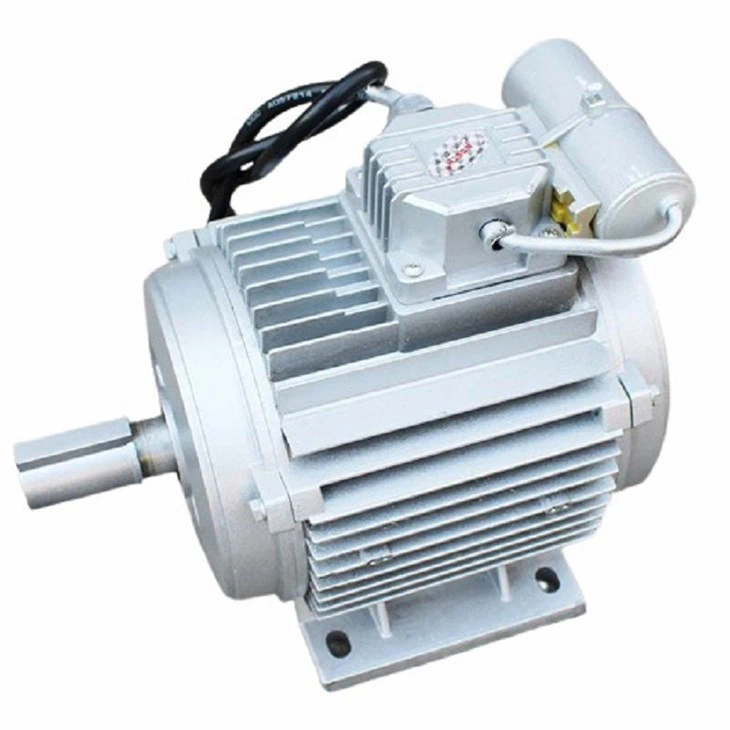
When the ambient air density is high, the air is heavier. This means that the fan has to work harder to move the same volume of air. Think of it like trying to push a heavy object compared to a light one. The fan's motor has to consume more power to generate the necessary force to move the dense air. As a result, the fan may draw more current from the power supply. If the motor isn't sized properly, it could overheat, which might lead to a shorter lifespan for the motor and potentially damage the fan.

On the other hand, when the air density is low, like at high altitudes or in very warm environments, the air is lighter. The fan can move the air more easily, and it may draw less power. But here's the catch - the fan's ability to generate pressure is also reduced. This can be a problem in applications where a certain amount of pressure is required to move the air through ducts or across filters. For example, in an industrial ventilation system, if the pressure is too low, the air might not reach all the areas that need to be ventilated.
Another aspect to consider is the efficiency of the FRP Motor Fan. Efficiency is the ratio of the useful work done by the fan (moving the air) to the energy input (electrical power). In high - density air, although the fan has to work harder, it can move more mass of air per unit time. This might seem like it would increase efficiency, but in reality, the increased power consumption due to the extra work can offset the gain. In low - density air, the fan uses less power, but because it's moving less mass of air, the overall efficiency might also be affected.
Let's take a closer look at some specific scenarios. In a coastal area where the air is relatively cool and humid, the air density is higher. If you're using an FRP Motor Fan in a building ventilation system there, the fan will need to be able to handle the extra load. You might want to consider a fan with a more powerful motor, like our Ac Cooler Motor. This motor is designed to provide the necessary torque and power to move the dense air effectively.

In contrast, if you're installing a fan in a high - altitude mountain town, the lower air density means that a fan with a less powerful motor might suffice. Our Single Phase Cooler Motor could be a great choice in this situation. It can operate efficiently in low - density air conditions while still providing adequate airflow.
For industrial settings, especially those using negative pressure fans, the impact of air density is also crucial. Negative pressure fans work by creating a pressure difference to draw air into a space. In high - density air, the fan has to create a larger pressure difference to achieve the same airflow rate. Our Motor for Negative Pressure Fan is engineered to handle these varying air density conditions. It can adjust its performance based on the load, ensuring optimal operation whether the air is thick or thin.
Now, you might be wondering how to select the right FRP Motor Fan considering the ambient air density. First, you need to know the air density at the installation site. You can find this information from local weather stations or by using online calculators that take into account altitude, temperature, and humidity. Once you have the air density data, you can work with us to choose a fan with the appropriate motor size and performance characteristics.
It's also important to note that regular maintenance of the FRP Motor Fan is essential, regardless of the air density. In high - density air, the fan components may experience more wear and tear due to the increased load. In low - density air, the fan might accumulate dust and debris more easily since the airflow is not as forceful. Cleaning the fan blades, checking the motor bearings, and ensuring proper electrical connections can all help extend the fan's lifespan and maintain its performance.
In conclusion, ambient air density plays a significant role in the performance, efficiency, and selection of an FRP Motor Fan. Whether you're in a coastal city, a mountain village, or an industrial complex, understanding how air density affects your fan is crucial for getting the most out of it. As a supplier, we're here to help you navigate these considerations and choose the best fan for your specific needs.
If you're interested in purchasing an FRP Motor Fan or have any questions about how air density might impact your application, don't hesitate to reach out. We're more than happy to have a chat and discuss the options that are right for you. Let's work together to ensure your ventilation needs are met effectively!
References
- ASHRAE Handbook - Fundamentals. This handbook provides in - depth information on air properties, including density, and their impact on HVAC systems.
- Fan Engineering by Buffalo Forge Company. It offers comprehensive knowledge about fan performance and the factors that influence it, such as air density.