

Can the Ie1 Motor be used in a pump system?
Dec 05, 2025
As a supplier of IE1 motors, I often receive inquiries from customers about the compatibility of IE1 motors with pump systems. This blog post aims to provide a comprehensive analysis of whether the IE1 motor can be used in a pump system, exploring its technical aspects, advantages, limitations, and practical considerations.
Technical Compatibility of IE1 Motors in Pump Systems
IE1 motors, also known as standard efficiency motors, are the most basic level of motor efficiency defined by the International Electrotechnical Commission (IEC). These motors are widely used in various industrial and commercial applications due to their relatively simple design and cost - effectiveness.
Pump systems, on the other hand, require a motor to convert electrical energy into mechanical energy to drive the pump impeller. The key factors for motor - pump compatibility include power rating, speed, torque, and efficiency.
In terms of power rating, IE1 motors come in a wide range of power outputs, which can generally meet the power requirements of different pump systems. Whether it is a small domestic water pump or a large industrial pump, there is usually an IE1 motor with an appropriate power rating available.
The speed of an IE1 motor is typically fixed at standard synchronous speeds such as 1500 rpm or 3000 rpm (for 50 Hz power supply). Most pump systems are designed to operate at specific speeds, and IE1 motors can be selected to match these requirements. For example, centrifugal pumps often operate at relatively high speeds, and an IE1 motor with a suitable speed can be used to drive them effectively.
Torque is another important factor. IE1 motors can provide sufficient starting torque and running torque for many pump applications. The starting torque of an IE1 motor is usually high enough to overcome the initial inertia of the pump and start the pumping process smoothly. During normal operation, the motor can maintain a stable torque output to ensure the continuous and efficient operation of the pump.
Advantages of Using IE1 Motors in Pump Systems
One of the main advantages of using IE1 motors in pump systems is their cost - effectiveness. Compared to higher - efficiency motors such as IE2, IE3, or IE4 motors, IE1 motors are generally less expensive to purchase. This makes them an attractive option for customers on a tight budget, especially for small - scale pump applications where the long - term energy savings from a high - efficiency motor may not justify the higher upfront cost.
IE1 motors are also relatively simple in design and easy to maintain. They have fewer complex components compared to more advanced motors, which means that maintenance and repair work can be carried out more easily and at a lower cost. This is particularly beneficial for pump systems in remote locations or in industries with limited technical resources.
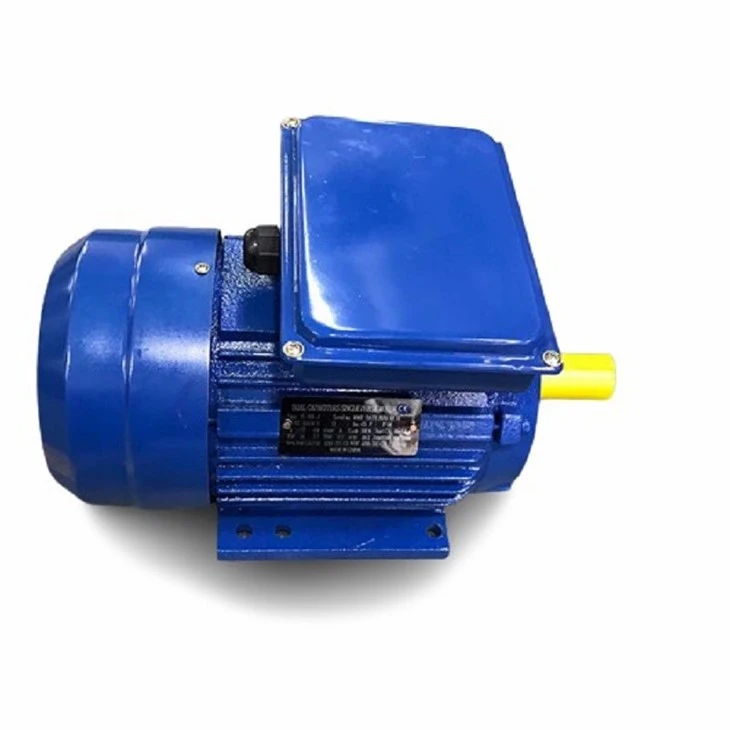
In addition, IE1 motors are widely available in the market. As a supplier, I can offer a variety of IE1 motors with different specifications to meet the diverse needs of pump system users. For example, we have Single Phase Cast Iron Motor which is suitable for small - scale single - phase pump applications, and High Pressure Washer Motor for high - pressure pump systems. Our Three Phase Cast Iron Motor Ie1 is a popular choice for industrial three - phase pump systems.
Limitations of Using IE1 Motors in Pump Systems
The main limitation of IE1 motors is their relatively low energy efficiency. Compared to higher - efficiency motors, IE1 motors consume more electrical energy to perform the same amount of work. This can result in higher operating costs over the long term, especially for pump systems that operate continuously or for extended periods.
In regions where energy efficiency regulations are becoming more stringent, the use of IE1 motors may be restricted or even prohibited in certain applications. For example, some countries have introduced minimum energy performance standards (MEPS) that require the use of higher - efficiency motors in new pump installations.
Another limitation is that IE1 motors may generate more heat during operation due to their lower efficiency. This can lead to increased wear and tear on the motor components and may require additional cooling measures, which can add to the overall cost and complexity of the pump system.
Practical Considerations for Using IE1 Motors in Pump Systems
When considering using an IE1 motor in a pump system, several practical factors need to be taken into account.
First, the operating conditions of the pump system should be carefully evaluated. If the pump operates for only a short period of time or at a low load, the energy savings from a high - efficiency motor may be negligible, and an IE1 motor may be a more suitable choice. However, if the pump operates continuously or at a high load, the long - term energy costs associated with an IE1 motor may be significant, and a higher - efficiency motor should be considered.

Second, the future expansion or modification of the pump system should be considered. If there is a possibility of increasing the pump capacity or changing the operating conditions in the future, it may be wise to choose a motor with some margin in terms of power and efficiency.
Finally, the local energy regulations and incentives should be taken into account. In some regions, there may be incentives such as tax credits or subsidies for using high - efficiency motors, while in other regions, there may be penalties for using low - efficiency motors. It is important to comply with these regulations and take advantage of any available incentives.
Conclusion
In conclusion, the IE1 motor can be used in a pump system, and it has its own advantages and limitations. For small - scale, intermittent - use, or budget - constrained pump applications, an IE1 motor can be a cost - effective and practical choice. However, for large - scale, continuous - operation, or energy - intensive pump systems, higher - efficiency motors may be more appropriate.
As a supplier of IE1 motors, I am committed to providing our customers with high - quality products and professional advice. If you are considering using an IE1 motor in your pump system or have any questions about motor - pump compatibility, please feel free to contact us for further discussion and procurement negotiation. We will work with you to find the most suitable motor solution for your specific needs.
References
- International Electrotechnical Commission (IEC). Standards related to motor efficiency.
- Pump manufacturers' technical manuals and guidelines.
- Industry reports on motor and pump applications.