

What is the principle of reversing the rotation direction of a fan motor?
Jul 02, 2025
As a fan motor supplier, I often encounter customers who are curious about the technical aspects of our products. One question that comes up frequently is: What is the principle of reversing the rotation direction of a fan motor? In this blog post, I'll delve into the details of this topic to help you understand how it works.
Understanding the Basics of Fan Motors
Before we discuss the principle of reversing the rotation direction, it's essential to have a basic understanding of how fan motors operate. Most fan motors are induction motors, which are widely used due to their simplicity, reliability, and cost - effectiveness.
An induction motor consists of two main parts: the stator and the rotor. The stator is the stationary part of the motor, and it contains coils of wire that are connected to an electrical power source. When an alternating current (AC) is applied to these coils, a rotating magnetic field is created. The rotor, on the other hand, is the rotating part of the motor. It is usually made of a series of conductive bars or laminations. The rotating magnetic field from the stator induces an electric current in the rotor, which in turn creates its own magnetic field. The interaction between the stator's magnetic field and the rotor's magnetic field causes the rotor to rotate.
The Principle of Reversing Rotation Direction
The rotation direction of a fan motor is determined by the direction of the rotating magnetic field in the stator. To reverse the rotation direction of a fan motor, we need to change the direction of this rotating magnetic field.
Single - Phase Induction Motors
Single - phase induction motors are commonly used in small fans, such as those in household appliances. These motors typically have two sets of windings: the main winding and the auxiliary winding. The auxiliary winding is used to create a phase difference between the currents in the two windings, which is necessary to start the motor and determine its rotation direction.

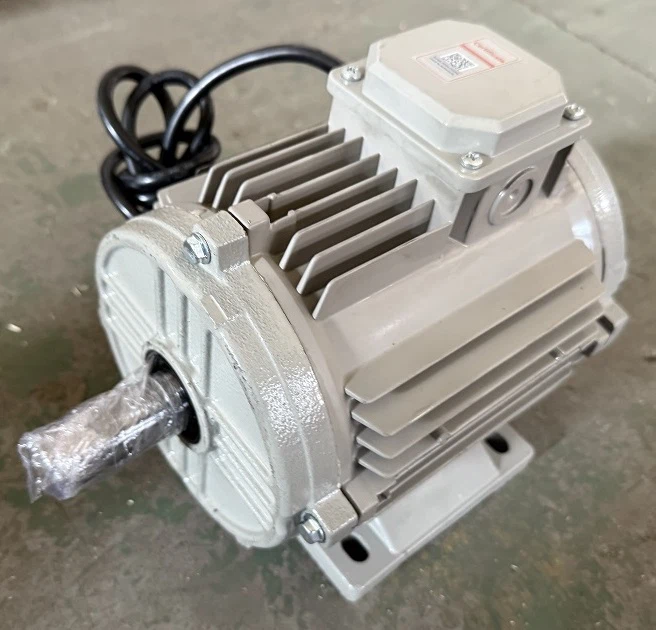
To reverse the rotation direction of a single - phase induction motor, we can reverse the connections of either the main winding or the auxiliary winding. When we reverse the connections of one of the windings, the phase relationship between the currents in the two windings changes, which in turn reverses the direction of the rotating magnetic field. As a result, the rotor rotates in the opposite direction.
For example, in a capacitor - start single - phase induction motor, the capacitor is connected in series with the auxiliary winding to create a phase shift. By reversing the connections of the auxiliary winding, we can change the phase relationship and reverse the rotation direction.
Three - Phase Induction Motors
Three - phase induction motors are used in larger fans, such as those in industrial applications. These motors have three sets of windings, each of which is connected to one of the three phases of the AC power supply. The three - phase power creates a rotating magnetic field in the stator, which causes the rotor to rotate.
To reverse the rotation direction of a three - phase induction motor, we simply need to swap the connections of any two of the three phases. When we swap the connections of two phases, the direction of the rotating magnetic field in the stator is reversed, and the rotor rotates in the opposite direction.
Applications of Reversing Fan Motor Rotation
The ability to reverse the rotation direction of a fan motor has several practical applications.
Air Circulation
In some cases, we may want to change the direction of air flow in a room or a ventilation system. By reversing the rotation direction of the fan motor, we can reverse the direction of air flow. For example, in a ceiling fan, reversing the rotation direction can be useful for different seasons. In the summer, the fan can be set to rotate counter - clockwise to create a downdraft, which helps to cool the room by creating a wind - chill effect. In the winter, the fan can be set to rotate clockwise to create an updraft, which helps to circulate warm air that has risen to the ceiling back down to the living area.
Cooling and Heating Systems
In air coolers and heaters, reversing the rotation direction of the fan motor can improve the efficiency of the system. For instance, in an air cooler, reversing the fan can help to distribute the cooled air more evenly in the room. In a heater, it can ensure that the warm air is circulated effectively. You can check out our Fan Motor For Air Cooler for more information on motors suitable for air coolers.
Our Fan Motor Products
As a fan motor supplier, we offer a wide range of high - quality fan motors, including Electric Fan Motors and Ac Fan Motor. Our motors are designed to be reliable, efficient, and easy to use. We also provide customization services to meet the specific needs of our customers. Whether you need a motor for a small household fan or a large industrial ventilation system, we have the right solution for you.
If you are interested in our fan motors or have any questions about reversing the rotation direction of a fan motor, please feel free to contact us. We are always ready to assist you with your procurement needs and provide technical support.
Conclusion
Reversing the rotation direction of a fan motor is a relatively simple process that involves changing the direction of the rotating magnetic field in the stator. By understanding the principles behind this process, we can effectively control the direction of air flow in various applications. As a fan motor supplier, we are committed to providing our customers with high - quality products and technical support to ensure that they can make the most of our motors. So, if you are in the market for a fan motor or need help with reversing its rotation direction, don't hesitate to get in touch with us for a procurement discussion.
References
- Chapman, S. J. (2012). Electric Machinery Fundamentals. McGraw - Hill Education.
- Fitzgerald, A. E., Kingsley, C., Jr., & Umans, S. D. (2003). Electric Machinery. McGraw - Hill Education.