

What is the speed range of the Ie1 Motor?
Jul 18, 2025
Hey there! As a supplier of Ie1 Motors, I often get asked about the speed range of these motors. So, I thought I'd write a blog post to share some insights on this topic.
First off, let's understand what an Ie1 Motor is. Ie1 Motors are part of the energy - efficiency classification of motors. They are the basic level of energy - efficient motors, offering decent performance while also keeping energy consumption in check.
The speed range of an Ie1 Motor can vary depending on several factors. One of the main factors is the motor's design and its intended application. Generally, Ie1 Motors can have a wide range of speeds.
For single - phase Ie1 Motors, like our Single Phase Cast Iron Motor and Single Phase Aluminum Motor, the speed is often related to the power supply frequency and the number of poles in the motor. In a standard 50 - Hz power supply system, a two - pole single - phase Ie1 Motor typically runs at around 3000 revolutions per minute (RPM). A four - pole motor, on the other hand, will run at approximately 1500 RPM. And an eight - pole motor can operate at around 750 RPM.
These speeds are theoretical, though. In real - world applications, there are some losses due to factors like friction, load, and magnetic losses. So, the actual speed might be slightly lower than the theoretical value. For example, a two - pole single - phase Ie1 Motor might run at around 2800 - 2900 RPM under normal operating conditions.
Three - phase Ie1 Motors also follow a similar principle. The speed is determined by the power supply frequency and the number of poles. In a 50 - Hz system, a two - pole three - phase Ie1 Motor can reach speeds close to 3000 RPM, while a four - pole one will be around 1500 RPM.
Now, let's talk about how the load affects the speed. When an Ie1 Motor is under a light load, it will run closer to its synchronous speed (the theoretical speed based on frequency and poles). But as the load increases, the motor's speed will drop. This is because the motor has to work harder to overcome the load, and there is more resistance in the system.
For instance, if you have a Woodworking Motor (which is often an Ie1 Motor), when it's just idling, it will run at a speed close to its rated speed. But when you start cutting thick pieces of wood, the load on the motor increases, and the speed will decrease slightly.
Another important aspect is the speed control of Ie1 Motors. There are different methods to control the speed of these motors. One common method is using a variable frequency drive (VFD). A VFD can change the frequency of the power supply to the motor, which in turn changes the motor's speed. This is a very effective way to adjust the speed according to the specific requirements of the application.
For example, in a manufacturing process where different speeds are needed at different stages, a VFD - controlled Ie1 Motor can be adjusted to run at the optimal speed for each stage. This not only improves the efficiency of the process but also reduces energy consumption.
Let's take a look at some of the typical speed ranges for different applications of Ie1 Motors. In fans and blowers, Ie1 Motors usually operate at relatively high speeds, often between 1000 - 3000 RPM. This high speed is needed to generate the necessary air flow.
In pumps, the speed range can be more variable. Small domestic pumps might run at speeds around 1500 - 3000 RPM, while larger industrial pumps can operate at lower speeds, say 750 - 1500 RPM, depending on the pump's design and the requirements of the fluid - handling system.
In conveyor systems, the speed of Ie1 Motors can be adjusted according to the production line's needs. It could range from a few hundred RPM for slow - moving conveyors to over 1000 RPM for high - speed conveyor belts.
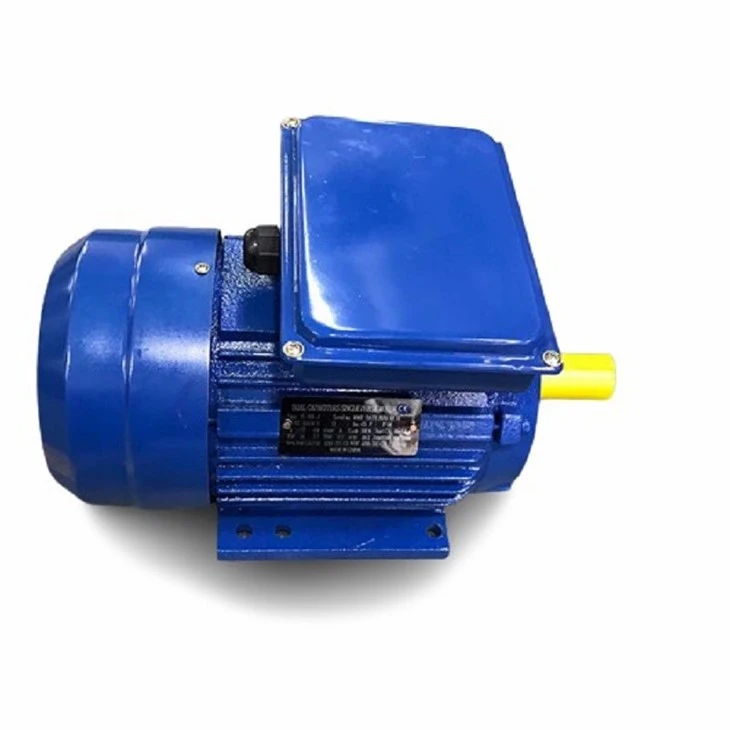

As a supplier of Ie1 Motors, we understand that different customers have different speed requirements. That's why we offer a wide range of Ie1 Motors with various speed capabilities. Whether you need a high - speed motor for a fan or a low - speed motor for a heavy - duty application, we've got you covered.
If you're in the market for an Ie1 Motor and have questions about the speed range or any other aspects, don't hesitate to reach out. We're here to help you find the perfect motor for your specific needs. We can provide detailed technical information, advice on installation and operation, and support throughout the lifespan of the motor.
In conclusion, the speed range of Ie1 Motors is quite diverse and is influenced by factors such as the number of poles, power supply frequency, load, and the control method. By understanding these factors, you can make an informed decision when choosing an Ie1 Motor for your application.
If you're interested in discussing your motor requirements further, feel free to get in touch. We're eager to start a conversation and help you find the ideal Ie1 Motor solution.
References
- Electrical Machinery Fundamentals by Stephen J. Chapman
- Electric Motors and Drives: Fundamentals, Types and Applications by Austin Hughes and Bill Drury