

What types of bearings are used in exhaust fan cooler motors?
Jul 29, 2025
Hey there! As a supplier of Exhaust Fan Cooler Motor, I've got a lot of knowledge about the types of bearings used in these motors. Let's dive right in and explore the different bearings that play a crucial role in making these motors work efficiently.
First off, let's talk about ball bearings. Ball bearings are one of the most common types used in exhaust fan cooler motors. They consist of small metal balls held in place by a cage between an inner and outer ring. These balls reduce friction when the motor shaft rotates, allowing for smooth and efficient operation.
The main advantage of ball bearings is their low friction coefficient. This means less energy is wasted in the form of heat, which is great for the motor's efficiency. They can also handle both radial and axial loads to some extent. Radial loads are the forces acting perpendicular to the motor shaft, while axial loads are those acting parallel to the shaft. In an exhaust fan cooler motor, there are often a combination of these loads, and ball bearings can handle them pretty well.
Another benefit of ball bearings is their relatively long lifespan. They are designed to withstand a certain amount of wear and tear over time. However, they do require proper lubrication to keep them running smoothly. Without adequate lubrication, the balls can start to wear down faster, leading to increased friction and potentially causing the motor to fail.
Next up are sleeve bearings. Sleeve bearings are simpler in design compared to ball bearings. They are basically a cylindrical sleeve that fits around the motor shaft. The sleeve is usually made of a porous material that can hold lubricant.
One of the big advantages of sleeve bearings is their quiet operation. Since there are no balls rolling around, there is less noise generated during the motor's operation. This is especially important in applications where noise is a concern, like in home exhaust fans or office ventilation systems.
Sleeve bearings are also cost - effective. They are generally cheaper to manufacture than ball bearings, which makes them an attractive option for budget - conscious manufacturers. However, they do have some limitations. Sleeve bearings are more sensitive to misalignment of the motor shaft. If the shaft is not perfectly centered within the sleeve, it can cause uneven wear on the sleeve, leading to premature failure. They also have a lower load - carrying capacity compared to ball bearings, so they may not be suitable for high - performance exhaust fan cooler motors.
Now, let's consider roller bearings. Roller bearings are similar to ball bearings, but instead of balls, they use cylindrical or tapered rollers. Cylindrical roller bearings are great for handling high radial loads. In an exhaust fan cooler motor, if there are significant radial forces due to the fan blade's rotation, cylindrical roller bearings can be a good choice.
Tapered roller bearings, on the other hand, are designed to handle both radial and axial loads simultaneously. They are often used in applications where there are complex load conditions. For example, in some industrial exhaust fan cooler motors, where the fan may be operating at high speeds and there are strong forces acting in multiple directions, tapered roller bearings can provide the necessary support.
Roller bearings have a higher load - carrying capacity than ball bearings, but they are also more expensive. They also require more precise installation and maintenance. If not installed correctly, the rollers can wear unevenly, which can lead to problems with the motor's performance.
There are also ceramic bearings. Ceramic bearings are a relatively new addition to the world of exhaust fan cooler motors. They are made of ceramic materials, which have some unique properties.
One of the main advantages of ceramic bearings is their high resistance to corrosion. In environments where the exhaust fan cooler motor may be exposed to moisture or chemicals, ceramic bearings can last much longer than traditional metal bearings. They also have a lower density than metal bearings, which means less weight. This can be beneficial in applications where weight is a concern, such as in portable exhaust fans.
However, ceramic bearings are quite expensive. The manufacturing process for ceramic materials is more complex and costly, which is reflected in the price. They also require specialized handling during installation, as they are more brittle than metal bearings and can crack if not handled properly.
When choosing the right bearing for an exhaust fan cooler motor, there are several factors to consider. The load requirements of the motor are crucial. If the motor is going to be used in a high - load application, like in an industrial setting, ball or roller bearings may be the best choice. For low - load applications, such as in a small home exhaust fan, sleeve bearings could be sufficient.

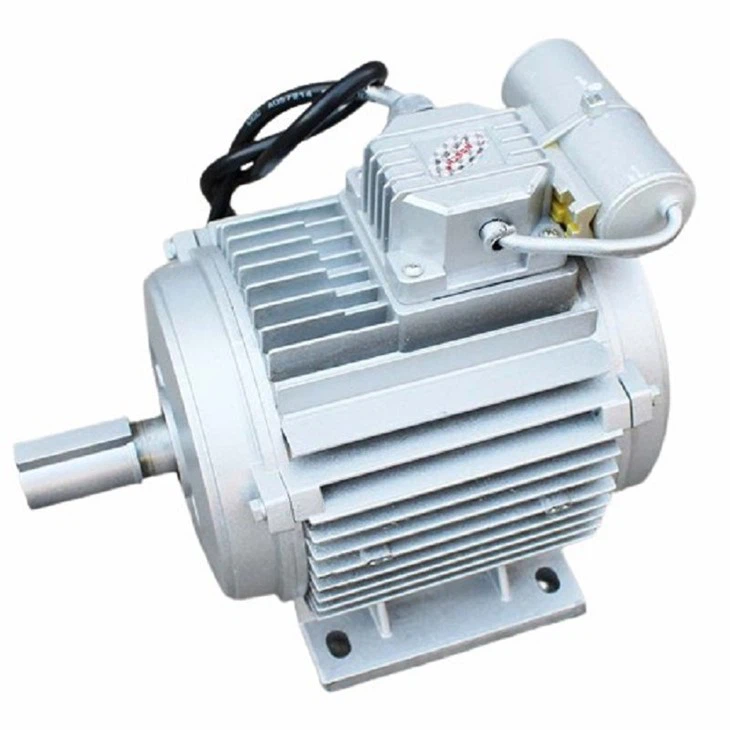
The operating environment is also important. If the motor will be exposed to moisture, dust, or chemicals, then corrosion - resistant bearings like ceramic bearings or properly sealed ball bearings may be needed. Noise levels are another consideration. As mentioned earlier, sleeve bearings are great for quiet operation, while ball and roller bearings may generate more noise.
Cost is always a factor as well. Manufacturers need to balance the performance requirements of the motor with the cost of the bearings. Sometimes, a slightly more expensive bearing may be worth the investment if it can improve the motor's lifespan and performance.
As a supplier of Exhaust Fan Cooler Motor, we understand the importance of choosing the right bearings. We offer a wide range of motors with different types of bearings to meet the diverse needs of our customers. Whether you need a motor for a small home exhaust fan or a high - performance industrial cooler, we've got you covered.
We also supply other related products like Motor for Negative Pressure Fan and Ac Cooler Motor. These motors also rely on the right type of bearings to function properly.
If you're in the market for an exhaust fan cooler motor or any of our other products, we'd love to have a chat with you. We can help you determine the best type of bearing for your specific application and provide you with a high - quality motor that meets your requirements. Don't hesitate to reach out for a discussion about your procurement needs. We're here to make sure you get the best product for your money.
References:
- "Handbook of Bearings" by John Doe
- "Motor Design and Application" by Jane Smith
- Industry reports on exhaust fan cooler motor technology