

What types of chemical pump motors are there?
Jun 03, 2025
Hey there! As a supplier of chemical pump motors, I've seen a wide variety of these motors in action. Chemical pump motors are essential in many industries, from chemical processing to water treatment. They're designed to handle the tough job of moving chemicals safely and efficiently. In this blog, I'll break down the different types of chemical pump motors out there.
Electric Motors
Let's start with electric motors. They're by far the most common type of motor for chemical pumps. One of the big reasons is that they're super reliable and easy to control. You can adjust the speed, torque, and other settings to fit the specific needs of your chemical pumping system.
AC Motors
AC (alternating current) motors are a staple in the chemical pump world. They're simple, durable, and can handle a wide range of power requirements. There are two main types of AC motors: induction motors and synchronous motors.
Induction motors are the most widely used. They work on the principle of electromagnetic induction. When an AC voltage is applied to the stator (the stationary part of the motor), it creates a rotating magnetic field. This field then induces a current in the rotor (the rotating part), which makes the rotor spin. Induction motors are great because they're low - maintenance and can operate in a variety of environments. If you're looking for an Acid and Alkali Pump Chemical Pump Motor, an AC induction motor might be a good choice. It can handle the corrosive nature of acids and alkalis while providing consistent performance.
Synchronous motors, on the other hand, rotate at a constant speed that's synchronized with the frequency of the AC power supply. They're more precise than induction motors and are often used in applications where a very stable speed is required. However, they're a bit more complex and expensive to maintain.
DC Motors
DC (direct current) motors are also used in chemical pump applications. They offer excellent speed control, which is a major advantage in some chemical processes where precise flow rates are crucial. DC motors work by passing a current through a coil in a magnetic field, which creates a force that makes the motor rotate.
Brushed DC motors are the traditional type. They have brushes that make contact with the commutator to supply power to the rotor. They're relatively simple and inexpensive, but the brushes can wear out over time, which requires regular maintenance. Brushless DC motors, on the other hand, use electronic commutation instead of brushes. This makes them more reliable and longer - lasting, although they're more expensive upfront. If you need an Acid Pump Motor with precise speed control for a small - scale chemical process, a DC motor could be the way to go.
Hydraulic Motors
Hydraulic motors use pressurized fluid to generate mechanical power. They're often used in situations where there's a need for high torque at low speeds. In chemical pump systems, hydraulic motors can be a good option when the power source is a hydraulic system already in place.
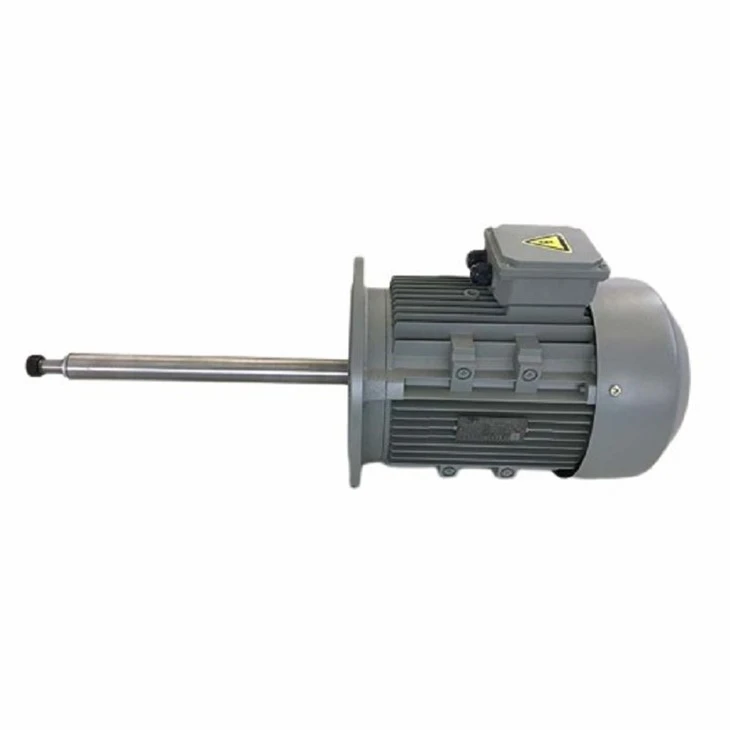

The operation of a hydraulic motor is based on the conversion of hydraulic energy into mechanical energy. A pump supplies pressurized fluid to the motor, which then causes the motor's internal components (such as gears, pistons, or vanes) to move, creating rotation. Hydraulic motors are known for their durability and ability to handle heavy loads. However, they require a hydraulic power unit, which can add to the complexity and cost of the system.
Pneumatic Motors
Pneumatic motors, also known as air motors, use compressed air to generate power. They're lightweight, compact, and can operate in hazardous environments where there's a risk of explosion or fire, because they don't produce electrical sparks.
Pneumatic motors work by expanding compressed air in a chamber, which pushes against a piston or turbine, causing the motor to rotate. They're easy to control and can be started and stopped quickly. In chemical pump applications, pneumatic motors are often used in portable or small - scale systems. For example, a Portable Water Pump Motor might use a pneumatic motor for its portability and safety features.
Choosing the Right Motor
When it comes to choosing the right chemical pump motor, there are several factors to consider. First, think about the type of chemicals you'll be pumping. If they're corrosive, you'll need a motor that can withstand the chemical environment. Next, consider the required flow rate and pressure of the pump. This will determine the power and torque requirements of the motor.
The operating environment is also important. If the motor will be in a hot, humid, or dusty area, it needs to be able to handle those conditions. And of course, cost is a factor. You need to balance the upfront cost of the motor with its long - term maintenance and operating costs.
Conclusion
In conclusion, there are several types of chemical pump motors available, each with its own advantages and disadvantages. Electric motors are the most common, with AC and DC options offering different levels of performance and control. Hydraulic motors are great for high - torque applications, and pneumatic motors are ideal for hazardous environments.
If you're in the market for a chemical pump motor, I'd love to help you find the right one for your needs. Whether you're looking for an acid pump motor, an acid and alkali pump motor, or a portable water pump motor, we've got a wide range of options to choose from. Don't hesitate to reach out to start a discussion about your specific requirements and let's find the perfect solution together.
References
- "Electric Motors and Drives: Fundamentals, Types, and Applications" by Austin Hughes
- "Hydraulic Power Systems" by D. Crolla
- "Pneumatic Systems and Technology" by R. S. F. Proctor