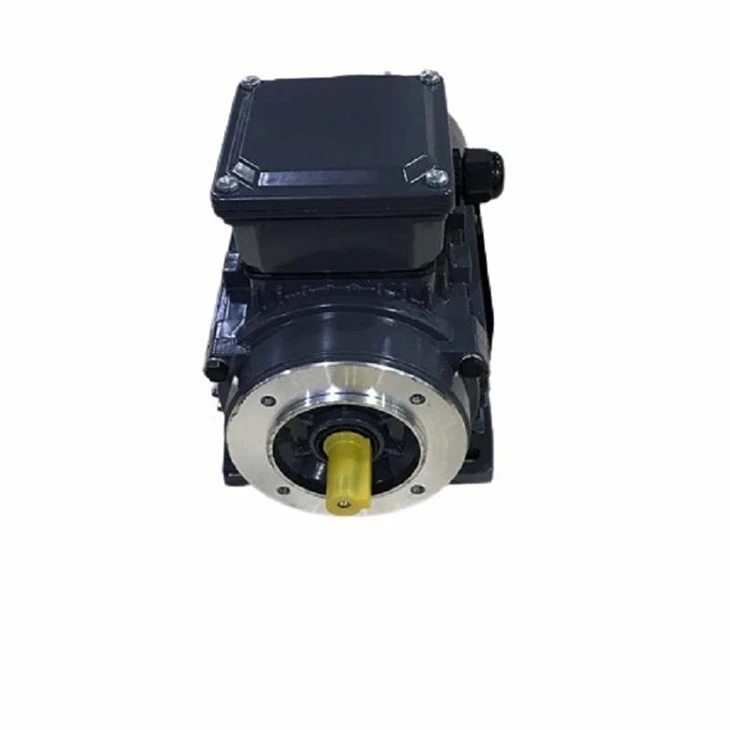
3 Phase Asynchronous Motor
video
3 Phase Asynchronous Motor
IE2__2_.JPG-removebg-preview (1)(001)
IE2__3_.JPG-removebg-preview (1)(001)
IE2__4_.JPG-removebg-preview (1)(001)
IE2__5_.JPG-removebg-preview(001)
1/2
<< /span>
>

3 Phase Asynchronous Motor

The 3 phase asynchronous motor complies with the IEC standards. It has an aluminum casing and an IE1 efficiency rating. It is available in 2, 4, 6, and 8 poles.

202308161616276151e90028cf4c179f6caa8dc0eca7521
 
Your Premier 3 Phase Asynchronous Motor Manufacturer
 

Zhejiang Fangyuan Sifu Mechanical And Electrical Co., Ltd. covers an area of 28,000 square meters. It has developed sea, land, and air transportation. the market share is growing at an annual rate of more than 30%. The company's main products are iron shell single three-phase asynchronous motor series, and aluminum shell three-phase asynchronous motor series.

International Certification

The company has obtained dozens of invention patent certificates. After testing by national testing institutions, it has obtained 3C certification, CE certification, and ISO9001 management system certification. 

Excellent Service

The company's after-sales service mechanism is perfect,, It has established a good reputation, and provides products and services for large enterprises such as Yili and Mengniu.

High Quality

Introducing Taiwan's advanced technology equipment and manufacturing processes, we attach great importance to product research and development, product update speed, and quality assurance.

Technological Innovation

The company has long-term technical cooperation with China Metrology Institute, Zhejiang University of Technology, and other universities to enhance its core strength in innovation, stability, efficiency, and energy conservation.

3-phase-asynchronous-motor3781a4aa-31a7-4fc8-ae9b-a5f6c4d21eb5


What Is 3 Phase Asynchronous Motor?

An asynchronous motor is a type of electric motor where electrical energy is converted into mechanical energy. 3 phase asynchronous motors are commonly used in the industry and are typically seen in industrial applications. The term "3 phase" refers to the three-phase AC electrical supply required for these motors to operate. 3 phase motors are the backbone of automation and industrial processes. These motors are capable of supplying efficient power to a wide range of machine and automation applications.


Conditions Of Use Of Motors

"The altitude should not exceed 1000m; (The altitude above 1000m belongs to the plateau motor and can be customized)."

"The maximum ambient temperature should not exceed 40°C. The minimum ambient temperature does not exceed -15°C."


"S1 working system; Voltage fluctuation of the power supply does not exceed (±5%), and the frequency does not exceed (±2%)."

"Insulation grade: F."

"Protection level: IP54, IP55."

"Cooling mode: IC411."

"Installation methods include: lMB3, B5, B35, V1,B14, B34, etc."


product-1077-1342


product-1086-1367

product-1080-245


Advantages of 3 Phase Asynchronous Motor


Efficiency

3 phase asynchronous motors are highly efficient, with efficiency levels typically ranging from 85% to 95%. This means that a significant portion of the electrical energy supplied to the motor is converted into mechanical energy, resulting in reduced energy consumption and lower operating costs.

High Starting Torque

3 phase asynchronous motors have a high starting torque, which allows them to start and accelerate heavy loads quickly. This is particularly beneficial in applications where a motor needs to overcome inertia or start under a heavy load.

Simple and Robust Design

The structure of a 3 phase asynchronous motor is relatively simple, with fewer moving parts compared to other types of motors. This simplicity makes them reliable and less prone to mechanical failures, resulting in lower maintenance requirements and longer service life.

Cost-Effective

3 phase asynchronous motors are widely available and have a lower initial cost compared to other types of motors. They also have a higher power-to-weight ratio, meaning they can deliver more power for a given size and weight, making them cost-effective for a wide range of applications.

Wide Range of Sizes and Power Ratings

3 phase asynchronous motors are available in a wide range of sizes and power ratings, making them suitable for various applications, from small appliances to large industrial machinery. This versatility allows for flexibility in motor selection based on specific requirements.

Easy Integration with Electrical Systems

3 phase asynchronous motors are compatible with standard 3-phase power supply systems, which are commonly used in industrial and commercial settings. This makes them easy to integrate into existing electrical systems without the need for additional equipment or modifications.


3 Phase Asynchronous Motor: Everything You Need to Know!


3 phase asynchronous motors are used to provide power in a wide range of industrial applications. Various control methods and devices are used to regulate the motion of the rotor and adjust the motor's performance. Three-phase asynchronous motors are widely used in industrial facilities, vehicles, compressors, pumps, conveyor systems, and many other applications due to their advantages such as energy efficiency, robust operation, and durability.

Team
3-phase-asynchronous-motor2ce1702c-2bc6-4482-82b6-90237969be97


Industrial Applications of 3 Phase Asynchronous Motor

Pumping Systems

The motors are widely used in water pumping systems, such as irrigation and industrial process pumps. They provide a reliable and efficient means of transferring fluid in various industries.

HVAC Systems

The motors are commonly used in heating, ventilation, and air conditioning (HVAC) systems. They power fans and blowers to circulate air in buildings, ensuring proper temperature control and air quality.

Compressors

The motors are used in compressors for various applications, such as air compressors for pneumatic systems or refrigeration compressors for cooling systems.

Conveyor Belts

The motors are often used to drive conveyor belts in manufacturing plants and warehouses. They provide the necessary power to move materials along the production line or in storage facilities.

Machine Tools

The motors are used in machine tools, such as lathes, milling machines, and drilling machines. They provide the rotational power required for machining operations.

Industrial Fans

The motors are commonly used to drive industrial fans, such as exhaust fans, ceiling fans, and ventilation fans. They help in maintaining airflow and controlling temperature in industrial environments.

Cranes and Hoists

The motors are utilized in cranes and hoists for lifting and moving heavy loads in industries like construction, manufacturing, and logistics.

Electric Vehicles

The motors are increasingly used in electric vehicles (EVs) due to their efficiency and ability to produce high torque. They provide the necessary propulsion for EVs.

10507567
6439451
product-382-382
13282244


Structure of a 3 Phase Asynchronous Motor


1

Stator: The stator is the stationary part of the motor and is typically made up of a laminated iron core with three sets of windings or coils. These windings are evenly spaced around the stator and are connected in a star (wye) or delta configuration.


2

Rotor: The rotor is the rotating part of the motor and is usually made up of a laminated iron core with conductive bars or squirrel cage conductors embedded in it. The rotor is placed inside the stator and is free to rotate when the motor is powered.


3

Bearings: The bearings support the rotor shaft and allow it to rotate smoothly. There are usually two bearings, one at each end of the motor.


4

End Shields: The end shields house the bearings and provide protection for the internal components of the motor. They are typically made of metal and are securely fastened to the stator.


5

Terminal Box: The terminal box is located on the outside of the motor and provides a connection point for the incoming power supply and the motor windings. It may also include terminals for connecting external devices such as thermal overloads or contactors.


6

Cooling System: Asynchronous motors generate heat during operation, so they are often equipped with a cooling system to dissipate this heat. The cooling system may include fans, fins, or a liquid cooling system.


7

Starting and Control Mechanisms: Asynchronous motors require a starting mechanism, such as a starter or an electronic soft starter, to initiate rotation.


FAQ

Q: What is a Synchronous Motor?

A: A 3-phase synchronous motor operates at a synchronous speed and the rotor poles align with the rotating stator poles. When the poles are aligned, the motor is said to be operating at synchronous speed. This type of motor always operates at synchronous speed, meaning variable speed is not possible with a synchronous motor. Synchronous motors need a secondary DC power supply to feed and magnetize the rotor, the DC is fed to the motor through the use of split rings. Permanent magnets can be used on the rotor as well. Since the motor needs to be operating at synchronous speed to work, a starting mechanism is usually necessary to spin the motor at or near operating speed before the motor can operate properly. The DC supply for the rotor is usually supplied from the main AC supply, rectified into a DC circuit supplied to the rotor, so while two different supply voltages are required, they both make use of the incoming 3-phase AC supply.

Q: What is the working principle of a three-phase asynchronous motor?

A: The working principle of a three-phase asynchronous motor involves the generation of a rotating magnetic field in the stator through three-phase windings. This rotating magnetic field induces currents in the rotor, creating its magnetic fields. The interaction between the stator's magnetic field and the induced magnetic fields in the rotor produces a torque that drives the rotor to rotate. This rotation occurs at a speed slightly lower than the speed of the rotating magnetic field, known as slip. With the continuous supply of three-phase power, the motor operates reliably and efficiently, making it suitable for various industrial applications.

Q: Is 3 phase induction motor synchronous or asynchronous?

A: A three-phase induction motor is classified as an asynchronous motor. While the rotating magnetic field in the stator of the motor rotates at a synchronous speed determined by the frequency of the power supply and the number of poles, the rotor rotates at a slightly slower speed, known as slip. This slip allows the rotor to maintain a relative speed with respect to the rotating magnetic field and generate torque, resulting in rotational motion. Hence, the rotor speed is asynchronous, or slightly lower than the synchronous speed of the rotating magnetic field.

Q: How do you start a 3-phase synchronous motor?

A: To start a three-phase synchronous motor, you typically need to use a separate starting mechanism or an external rotational force. Here are some common methods used to start a three-phase synchronous motor: External Starting Mechanism: One common method is to use a separate starting mechanism, such as a pony motor or a small induction motor, to initially rotate the synchronous motor. The external motor provides the required starting torque to overcome the inertia and bring the synchronous motor up to its synchronous speed. Once the synchronous motor reaches its synchronous speed, it can then be synchronized with the power supply and connected to it. Damper Windings: Some synchronous motors have additional windings in the rotor called damper windings. These windings are shorted and have low resistance, which creates a magnetic field that interacts with the stator's rotating magnetic field, generating torque. The damper windings provide the necessary starting torque to bring the synchronous motor up to its synchronous speed. Once the motor reaches synchronous speed, the damper windings can be disconnected. Static Excitation: Another method is using static excitation. In this method, the synchronous motor is first brought up to a certain minimum speed using an external rotational force or a starting mechanism. Then, a direct current (DC) is applied to the field winding of the rotor. This DC field current produces a fixed magnetic field, which locks the rotor in synchronization with the rotating magnetic field of the stator. Once synchronized, the synchronous motor can be connected to the power supply.

Q: What happens if you run a 3-phase motor on a single-phase?

A: A 3-phase motor, once rotating, can keep rotating even if one phase is lost (wire cut), but the current in the remaining 2 phases will rise and create overheating and vibrations. Generally, the thermal relay includes protection against the motor operation in single-phase.

Q: Can you wire a 3-phase motor to 220V?

A: Yes, a 220V AC power supply can run a 3-phase AC motor. However, it's important to ensure that the motor is designed to operate at 220V and that the power supply can provide the necessary current and power for the motor's operation.

Q: Are all 3-phase motors AC or DC?

A: All DC motors are single-phase, but AC motors can be single-phase or three-phase. AC and DC motors use the same principle of using an armature winding and magnetic field except with DC motors, the armature rotates while the magnetic field doesn't rotate.

Q: What is necessary to reverse a three-phase motor?

A: To reverse the direction of a three-phase motor, you typically need to interchange any two of the three-phase supply connections. This can be done by swapping the positions of any two phases in the motor wiring. By doing so, the direction of the rotating magnetic field created in the stator is reversed, which causes the motor to rotate in the opposite direction. It's important to note that this method only applies to motors that do not have any additional control circuitry or complex motor control systems. If the motor is connected to a motor control system, such as a variable frequency drive (VFD), additional programming or configuration settings may be required to reverse the motor's direction.

Q: Why a three-phase synchronous motor is not self-starting?

A: A three-phase synchronous motor is not self-starting because it cannot generate torque on its own at zero or low speeds. In a synchronous motor, the rotor must rotate at the same speed as the rotating magnetic field in the stator, known as the synchronous speed. During startup, the rotor of a synchronous motor does not have any initial rotational motion. As a result, there is no relative motion between the rotor and the rotating magnetic field in the stator. Without this relative motion, no voltage or current is induced in the rotor windings, which means there is no magnetic field generated in the rotor. Without the magnetic field in the rotor, there is no interaction with the stator's rotating magnetic field to produce torque. Consequently, the synchronous motor cannot develop the necessary starting torque to overcome inertia and initiate rotation without the assistance of external means such as a separate starting mechanism or an external rotational force.

Q: What makes a three-phase motor work?

A: A 3 phase induction motor derives its name from the fact that the rotor current is induced by the magnetic field, instead of electrical connections. The operating principle of a 3-phase induction motor is based on the production of a rotating magnetic field (r.m.f.).

Q: Does a three-phase motor need a capacitor?

A: In general, a three-phase motor does not require a capacitor for its operation. Capacitors are typically used in single-phase motors to provide a phase shift and create a rotating magnetic field necessary for starting and running the motor. Three-phase motors, on the other hand, do not need capacitors because they inherently create a rotating magnetic field due to the arrangement of the three-phase power supply. The three-phase power supply provides three separate voltages that are 120 degrees out of phase with each other. These voltages create a rotating magnetic field in the stator of the motor, which interacts with the rotor to produce torque and drive the motor.

Q: Are all 3-phase motors synchronous?

A: 3-phase motors are either synchronous or asynchronous (also known as induction motors). Asynchronous (induction) motors can be further categorized into two different types based on their construction: the squirrel cage induction motor and the wound rotor induction motor.

Q: What makes a synchronous motor turn?

A: Synchronous motors use electromagnets as the stator of the motor which create a magnetic field that rotates in time with the oscillations of the current.

Q: What are the two basic methods of automatically starting a synchronous motor?

A: The two basic methods of automatically starting a synchronous motor are: Direct-on-line (DOL) starting: In this method, the motor is connected directly to the power supply by closing a contactor or a switch. This allows the full line voltage and current to be applied to the motor windings, which starts the motor. DOL starting is typically used for smaller synchronous motors that have a low starting torque requirement. Auto-synchronizing starting: This method is used for larger synchronous motors that require a higher starting torque. In auto-synchronizing starting, an auxiliary motor called a pony motor or a separately excited DC motor is used to bring the synchronous motor up to a predetermined speed. Once the synchronous motor reaches this speed, it is synchronized with the power system by closing the main contacts. The pony motor is then disconnected, and the synchronous motor continues to run on its own.

Q: Do 3 phase motors have more torque than single?

A: Yes, three-phase motors generally have more torque than single-phase motors. This is because three-phase motors create a rotating magnetic field that generates a constant torque, whereas single-phase motors rely on starting methods such as capacitance or shaded-pole windings to generate a rotating magnetic field. The starting torque of a single-phase motor is typically lower compared to a three-phase motor. Additionally, three-phase motors have a balanced distribution of power across the three phases, which allows for smoother operation and better utilization of power. This balanced power distribution contributes to the higher torque output of three-phase motors.

Q: What does a 3-phase synchronous motor need?

A: The stator of 3 3-phase synchronous motor is excited with a 3-phase supply while the rotor is with DC Supply. That's why 3 3-phase synchronous motor needs 3 3-phase AC supply as well as DC supply.

Q: How efficient is a 3 phase asynchronous motor?

A: 3-phase asynchronous motors are known for their high efficiency, making them widely used in various industrial applications. The efficiency of a motor is typically measured by its power factor and overall energy consumption. Power Factor: 3 phase asynchronous motors generally have a power factor close to unity, typically ranging from 0.85 to 0.95. A power factor of 1 implies that all the power supplied to the motor is effectively converted into useful mechanical work, resulting in higher efficiency. Energy Consumption: The energy consumption of a 3-phase asynchronous motor can vary depending on its size, load, and design. However, modern motors are designed to be highly efficient, with efficiency ratings often exceeding 90%. This means that more than 90% of the electrical energy supplied to the motor is converted into mechanical output power, while the remaining percentage is lost as heat.

Q: Can a 3 phase asynchronous motor be used with a variable frequency drive?

A: Yes, a 3-phase asynchronous motor can be used with a variable frequency drive (VFD), which allows for precise speed control and improved energy efficiency. By adjusting the frequency and voltage supplied to the motor, the VFD can control the motor's speed and torque to match the desired application requirements. This combination is commonly used in industrial applications where variable speeds and optimized energy consumption are important. It is necessary to ensure that the motor is specifically designed for use with a VFD to ensure compatibility and optimal performance.

Q: What is the lifespan of a 3 phase asynchronous motor?

A: Generally, a well-designed and properly maintained motor can last anywhere from 15 to 25 years or more. Factors like high-quality construction, operating within specified limits, regular maintenance, and appropriate duty cycles can contribute to a longer lifespan.

Q: Are there any energy-saving measures for a 3 phase asynchronous motor?

A: There are several energy-saving measures for a 3-phase asynchronous motor. These include installing variable frequency drives (VFDs) to control the motor's speed and torque, upgrading to high-efficiency motors, properly sizing the motor for the application, implementing power factor correction measures, conducting regular motor maintenance, and managing and reducing motor load. By implementing these measures, energy consumption can be significantly reduced, leading to improved efficiency and cost savings.


Hot Tags: 3 phase asynchronous motor, China 3 phase asynchronous motor manufacturers, suppliers, factory, motor for extruders, electric motor education, electric motor event, Three Phase Aluminum Motor IE1, motor for dryers, motor for heaters

Send Inquiry

(0/10)

clearall