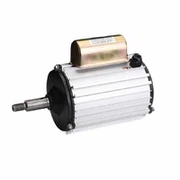
Classification of Livestock Ventilation Fan Motors
Feb 16, 2024
Livestock ventilation fans play a crucial role in ensuring the well-being and productivity of animals in livestock buildings. Fan motors are the primary driving force behind these systems, and they come in various types and sizes. Here, we will discuss the different classifications of livestock ventilation fan motors.
1. Direct Drive Motors
Direct drive motors are the most common type of fan motor used in livestock buildings. They are mounted directly onto the fan blades and rotate at the same speed as the blades. Direct drive motors are simple, reliable, and low maintenance. They are ideal for small to medium-sized fans and provide high efficiency.
2. Belt Drive Motors
Belt drive motors are used for larger fans that require higher airflow and pressure. They feature a shaft that rotates at a different speed than the fan blades. A belt connects the motor to the fan blades, allowing adjustment of fan speed. These motors are more complex than direct drive motors and require more maintenance, but they offer greater flexibility in terms of fan speed.
3. High-Efficiency Motors
High-efficiency motors are designed to reduce energy consumption and operating costs. They use advanced technology to improve motor efficiency and reduce power loss. These motors are usually more expensive than standard motors, but they can significantly reduce operating costs over the lifetime of the fan.
4. Variable Speed Motors
Variable speed motors offer the ability to adjust fan speed to match specific ventilation requirements. They are designed to function at different speeds, allowing for greater flexibility in terms of ventilation rates. These motors are typically used in larger buildings where ventilation requirements vary throughout the day or season.
In conclusion, livestock ventilation fan motors play a critical role in maintaining the comfort and health of animals in modern livestock buildings. While several classifications of motors are available, each has its unique features and advantages. Regardless of the type of motor, it is essential to ensure proper maintenance to achieve optimum performance, reduce operating costs, and prolong the motor's lifespan