

How to select the right IE3 electric motor for a specific application?
Sep 04, 2025
Hey there! As a supplier of IE3 Electric Motors, I've seen firsthand how crucial it is to pick the right motor for a specific application. It's not just about getting the job done; it's about doing it efficiently, cost - effectively, and safely. In this blog, I'll share some tips on how to select the perfect IE3 electric motor for your needs.
Understanding IE3 Motors
First things first, let's talk about what IE3 motors are. IE3 stands for International Efficiency Class 3. These motors are designed to be highly efficient, which means they use less energy to do the same amount of work compared to lower - efficiency motors. This not only saves you money on electricity bills but also reduces your carbon footprint. You can check out our Ie3 Electric Motors page to get a better understanding of the variety we offer.
Power Requirements
The most basic factor to consider when selecting an IE3 electric motor is the power requirement of your application. You need to figure out how much power the motor needs to deliver to run your equipment smoothly. This is usually measured in horsepower (HP) or kilowatts (kW).
If you're running a small machine like a fan or a pump, a lower - power motor might be sufficient. But for heavy - duty applications such as industrial compressors or large conveyor belts, you'll need a high - power motor. To determine the exact power requirement, you can look at the specifications of your equipment or consult with an engineer.
Speed and Torque
Speed and torque are also important considerations. Speed is measured in revolutions per minute (RPM), and it refers to how fast the motor shaft rotates. Torque, on the other hand, is the rotational force that the motor can generate.
Different applications have different speed and torque requirements. For example, a machine that needs to start and stop frequently, like a printing press, requires a motor with high starting torque. On the contrary, a constant - speed application such as a ventilation system might need a motor with a steady RPM. Make sure to match the motor's speed and torque characteristics with your application's needs.
Environmental Conditions
The environment in which the motor will operate plays a significant role in the selection process. If the motor is going to be used in a dirty or dusty environment, you'll need a motor with a high level of protection against dust and debris. Look for motors with an appropriate Ingress Protection (IP) rating.
Similarly, if the motor will be exposed to moisture or corrosive substances, you should choose a motor with a corrosion - resistant design. For instance, our Three Phase Aluminum Motor Ie3 is a great option for applications where corrosion might be an issue, as aluminum is known for its corrosion - resistant properties.
Duty Cycle
The duty cycle of an application refers to how often the motor will be used and for how long. There are different types of duty cycles, such as continuous duty (S1), short - time duty (S2), and intermittent periodic duty (S3).
If your application requires the motor to run continuously for long periods, you'll need a motor designed for continuous duty. On the other hand, if the motor will only be used for short bursts, a short - time duty motor might be more appropriate. Selecting the right duty cycle motor ensures that the motor doesn't overheat and has a long service life.
Efficiency and Cost
As an IE3 motor supplier, I can't stress enough the importance of efficiency. Higher - efficiency motors might cost more upfront, but they save you money in the long run by reducing energy consumption. When comparing different motors, look at the motor's efficiency rating. Our High Efficiency Motor Ie3 models are designed to provide maximum efficiency, which can lead to significant cost savings over time.
However, cost is also a practical consideration. You need to balance the initial cost of the motor with the long - term energy savings. Sometimes, a slightly less efficient motor might be a better choice if the cost difference is substantial and the energy savings don't justify the higher price.
Motor Type
There are different types of IE3 electric motors available, such as induction motors, synchronous motors, and DC motors. Induction motors are the most commonly used type because they are simple, reliable, and cost - effective. Synchronous motors, on the other hand, offer higher efficiency and better speed control but are more expensive. DC motors are often used in applications where precise speed control is required.
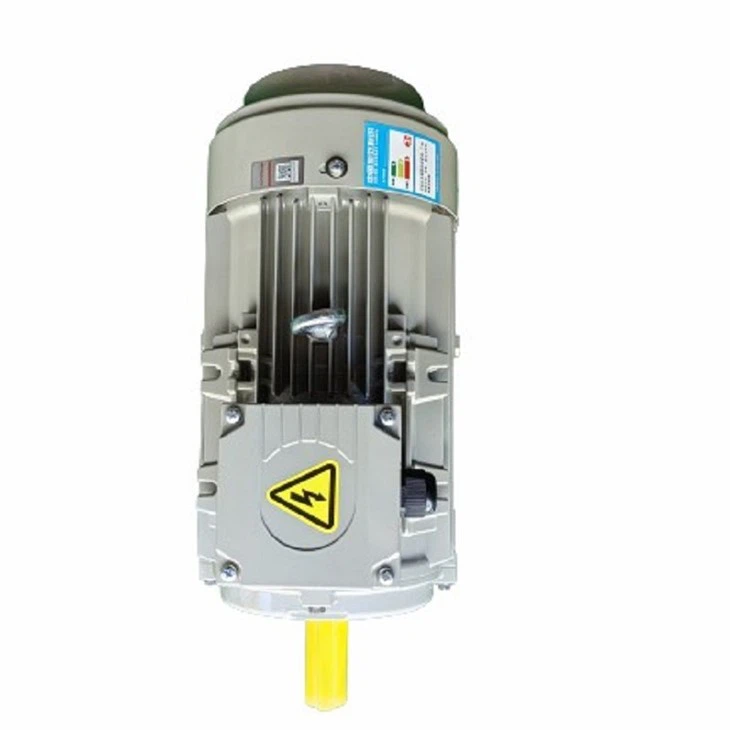

Choose the motor type based on your application's specific requirements. If you're not sure which type is best for you, feel free to reach out to us. We have a team of experts who can help you make the right decision.
Shaft and Mounting
The shaft size and mounting type of the motor are also important details. The shaft size needs to match the coupling or pulley that will be attached to it. There are different shaft diameters and keyway sizes available, so make sure to choose the right one.
As for the mounting type, it should be compatible with your equipment. Common mounting types include foot - mounted, flange - mounted, and face - mounted. Check the mounting requirements of your application and select a motor with the appropriate mounting option.
Service and Support
Last but not least, consider the service and support offered by the motor supplier. You want to work with a supplier who can provide technical assistance, maintenance services, and replacement parts when needed. At our company, we pride ourselves on offering excellent customer service. We're always here to help you with any questions or issues you might have with your IE3 electric motor.
Conclusion
Selecting the right IE3 electric motor for a specific application is a multi - faceted process. You need to consider factors such as power requirements, speed and torque, environmental conditions, duty cycle, efficiency, cost, motor type, shaft and mounting, and service and support. By taking all these factors into account, you can ensure that you choose a motor that meets your application's needs and provides long - term value.
If you're in the market for an IE3 electric motor and need help with the selection process, don't hesitate to get in touch with us. We're here to assist you in finding the perfect motor for your application. Let's start a conversation about your needs and see how we can help you optimize your operations with our high - quality IE3 motors.
References
- Motor Selection Guide - General Electric
- Industrial Electric Motor Handbook - McGraw - Hill