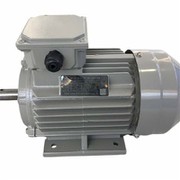
Motor protector
Aug 05, 2023
The function of the motor protector is to provide comprehensive protection for the motor. It is a device that alarms or protects the motor in case of overload, phase loss, rotor blockage, short circuit, overvoltage, undervoltage, leakage, three-phase imbalance, overheating, bearing wear, and eccentricity of the stator and rotor.
General knowledge of motor protection
1. Electric motors are more prone to burnout than in the past: due to the continuous development of insulation technology, the design of electric motors requires both increased output and reduced volume, resulting in smaller and weaker thermal capacity and overload capacity of new motors; Due to the improvement of production automation, it is required that the motor frequently operates in various ways such as frequent starting, braking, forward and reverse rotation, and variable load, which puts higher requirements on the motor protection device. In addition, motors have a wider range of applications and often work in extremely harsh environments, such as damp, high temperature, dusty, and corrosive environments. All of these have made the motor more prone to damage, especially with the highest frequency of faults such as overload, short circuit, phase loss, and barrel sweeping.
2. The protection effect of traditional protection devices is not ideal: traditional motor protection devices mainly rely on thermal relays, but thermal relays have low sensitivity, large errors, poor stability, and unreliable protection. The fact is also that although many devices are equipped with thermal relays, the phenomenon of motor damage affecting normal production is still common.
3. The development status of motor protection: Motor protectors have evolved from mechanical to electronic and intelligent types, which can directly display the current, voltage, temperature and other parameters of the motor. They have high sensitivity, reliability, multiple functions, and are easy to debug. After the protection action, the types of faults are diverse, reducing motor damage and greatly facilitating fault diagnosis, which is conducive to fault handling on the production site and shortening production recovery time. In addition, the use of motor air gap magnetic field for motor eccentricity detection technology makes it possible to monitor the wear status of the motor online. By displaying the trend of the degree of motor eccentricity through curves, bearing wear and faults such as inner and outer circles can be detected early, and early detection and treatment can be achieved to avoid the occurrence of sweeping accidents.
3. Principle of selecting protectors: Reasonable selection of motor protection devices can fully utilize the overload capacity of the motor while avoiding damage, thereby improving the reliability and production continuity of the electric drive system. The specific function selection should comprehensively consider factors such as the value of the motor itself, load type, usage environment, the importance of the main equipment of the motor, and whether the motor's withdrawal from operation has a serious impact on the production system, striving to achieve economic rationality.
4. Ideal motor protector: The ideal motor protector is not the most functional or advanced, but should meet the actual needs of the site, achieve a unity of economy and reliability, and have a high performance price ratio. Reasonably select the types and functions of protectors based on the actual situation on site, while considering the simple and convenient installation, adjustment, and use of protectors. More importantly, choose high-quality protectors.
Selection of protectors
Basic principles for selection:
There is no unified standard for motor protection products in the market, and there are various models and specifications. Manufacturers have derived many series of products to meet the different needs of users, with a wide variety of types, which brings many inconveniences to the selection of users; Users should fully consider the actual needs of motor protection when selecting models, reasonably select protection functions and methods, in order to achieve good protection effects, improve equipment operation reliability, reduce unplanned parking, and reduce accident losses.
The basic method for selection:
1. Conditions related to selection
1) Motor parameters: It is necessary to first understand the specifications and models, functional characteristics, protection types, rated voltage, rated current, rated power, power frequency, insulation level, etc. of the motor. These contents basically provide a reference basis for users to correctly select protectors.
2) Environmental conditions: mainly refer to room temperature, high temperature, high cold, corrosion, vibration, sandstorms, altitude, electromagnetic pollution, etc.
3) Motor usage: mainly refers to the characteristics required for driving mechanical equipment, such as different load mechanical characteristics such as fans, water pumps, air compressors, lathes, oil field pumping units, etc.
4) Control mode: The control modes include manual, automatic, local control, remote control, standalone operation, and centralized control of the production line. The starting methods include direct, step-down, star angle, frequency sensitive varistor, frequency converter, soft start, etc.
5) Other aspects: The user's monitoring and management of on-site production, and the severity of the impact of abnormal shutdowns on production.
There are many factors related to the selection of protectors, such as installation location, power supply situation, distribution system situation, etc; We also need to consider whether to configure protection for newly purchased motors, upgrade motor protection, or improve accident motor protection; We also need to consider the difficulty of changing the motor protection method and the degree of impact on production; The selection and adjustment of protectors need to be comprehensively considered based on the actual working conditions on site. [4]
2. Common types of motor protectors
1) Thermal relay: ordinary small capacity AC motor, with good working conditions and no harsh working conditions such as frequent starting; Due to poor accuracy and reliability, it is not recommended to use.
2) Electronic type: Detects the three-phase current value, sets the current value using potentiometers or pull-out switches, and the circuit generally adopts analog type, using inverse or definite time working characteristics. The protection functions include overload, phase loss, locked rotor, etc. The fault type is displayed using an indicator light, and the operating power is displayed using a digital tube.
3) Intelligent: Detects the three-phase current value, and the protector uses a microcontroller to achieve intelligent comprehensive protection of the motor, integrating protection, measurement, communication, and display. The setting current is set digitally and operated through the operation panel buttons. Users can adjust various parameters on site according to the specific situation of the motor; Using a digital tube as the display window or a large screen LCD display, it can support various communication protocols, such as ModBUS, ProfiBUS, etc., and is relatively expensive, suitable for important occasions; The protection of high-voltage motors adopts intelligent protection devices.
4) Thermal protection type: embedding thermal components in the motor and protecting it according to the temperature of the motor winding, resulting in good protection effect; But when the motor has a large capacity, it needs to be used in conjunction with a current monitoring type to avoid damage to the motor winding due to the hysteresis of the temperature measuring element when the temperature rises sharply during motor lockup.
5) Magnetic field temperature detection type: A magnetic field detection coil and temperature measuring element are embedded in the motor to protect against changes in the rotating magnetic field and temperature inside the motor. The main functions include overload, locked rotor, phase loss, overheating protection, and wear monitoring. The protection function is complete, but the disadvantage is that a magnetic field detection coil and temperature sensor need to be installed inside the motor.
3. Selection of protector type
1) For single machine independent running motors with low requirements for working conditions, simple operation control, and minimal impact of shutdown on production, ordinary protectors can be selected. Due to their simple structure, on-site installation, wiring, and replacement are convenient, and the operation is simple, with high cost-effectiveness.
2) For motors with harsh working conditions and high reliability requirements, especially those involving automated production lines, mid to high grade and fully functional intelligent protectors should be selected.
3) For explosion-proof motors, eccentricity caused by bearing wear may cause high temperature friction at the explosion-proof gap, creating an explosion hazard. Therefore, the wear status monitoring function should be selected. For special equipment such as large capacity high-pressure submersible pumps, due to the difficulty of inspection and maintenance, wear status monitoring function should also be selected, while monitoring the temperature of bearings to avoid significant economic losses caused by sweeping accidents.
4) For protectors used in places with explosion-proof requirements, corresponding explosion-proof protectors should be selected according to the specific requirements of the application site to avoid safety accidents.